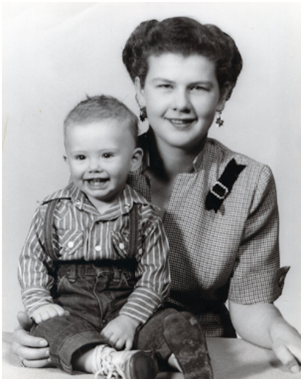
Kenneth Howard Tipton Jr. was born in El Paso, Texas, in 1952, to Zelda Mae Rankins, a 17-year-old high school honor student, and Kenneth Tipton, a 26-year-old motorcycle patrolman. Their brief marriage ended when Officer Tipton was dismissed for chasing criminals into Mexico and returning with them to face justice in Texas. His reputation as a notorious womanizer also contributed to the divorce. At 19, Zelda remarried William “Bill” Steckenrider, an Air Force veteran stationed in El Paso. After Bill’s discharge, they moved to Columbia, Missouri, so he could attend the University of Missouri, also known as “Mizzou,” just a few hours from his parents in St. Louis.
The family lived in renovated World War II barracks converted into student housing for Korean War veterans. During this time, the young Kenny experienced the magic of cinema for the first time. At night, movies played on a white billboard behind their barracks, where Kenny and his mother would sit on blankets, mesmerized by the flickering images alongside other students. He was captivated not only by the stories unfolding on the screen but also by how the projector worked. The projectionist, a former Marine with a sharp flattop and a firm military bearing, enjoyed explaining the machinery to Kenny. Often, they watched movies together, Kenny in tiger-striped pajamas, sharing popcorn his mother had prepared.
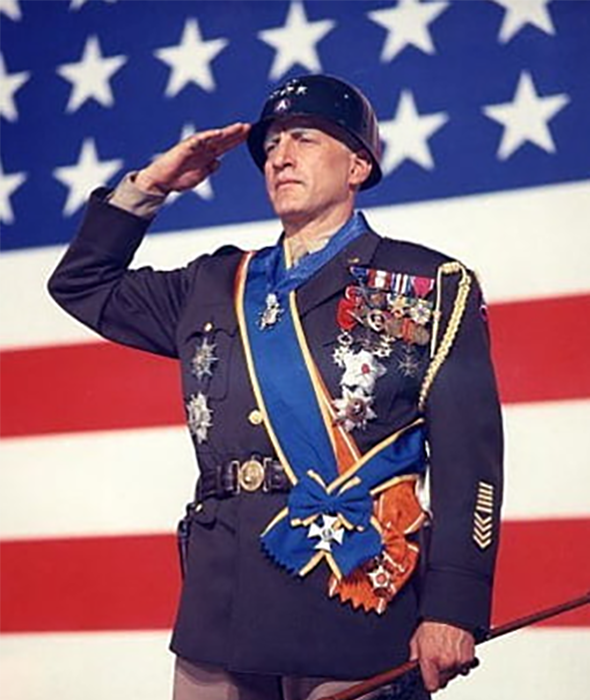
Over four decades later, Ken Tipton would find himself in the home of that same projectionist, now legendary Oscar-winning actor George C. Scott, renowned for classics such as “Patton,” “The Hustler,” and “Dr. Strangelove.” Scott had agreed to play a role in the film Ken had written and was set to direct. Sadly, Mr. Scott passed away before production could begin.
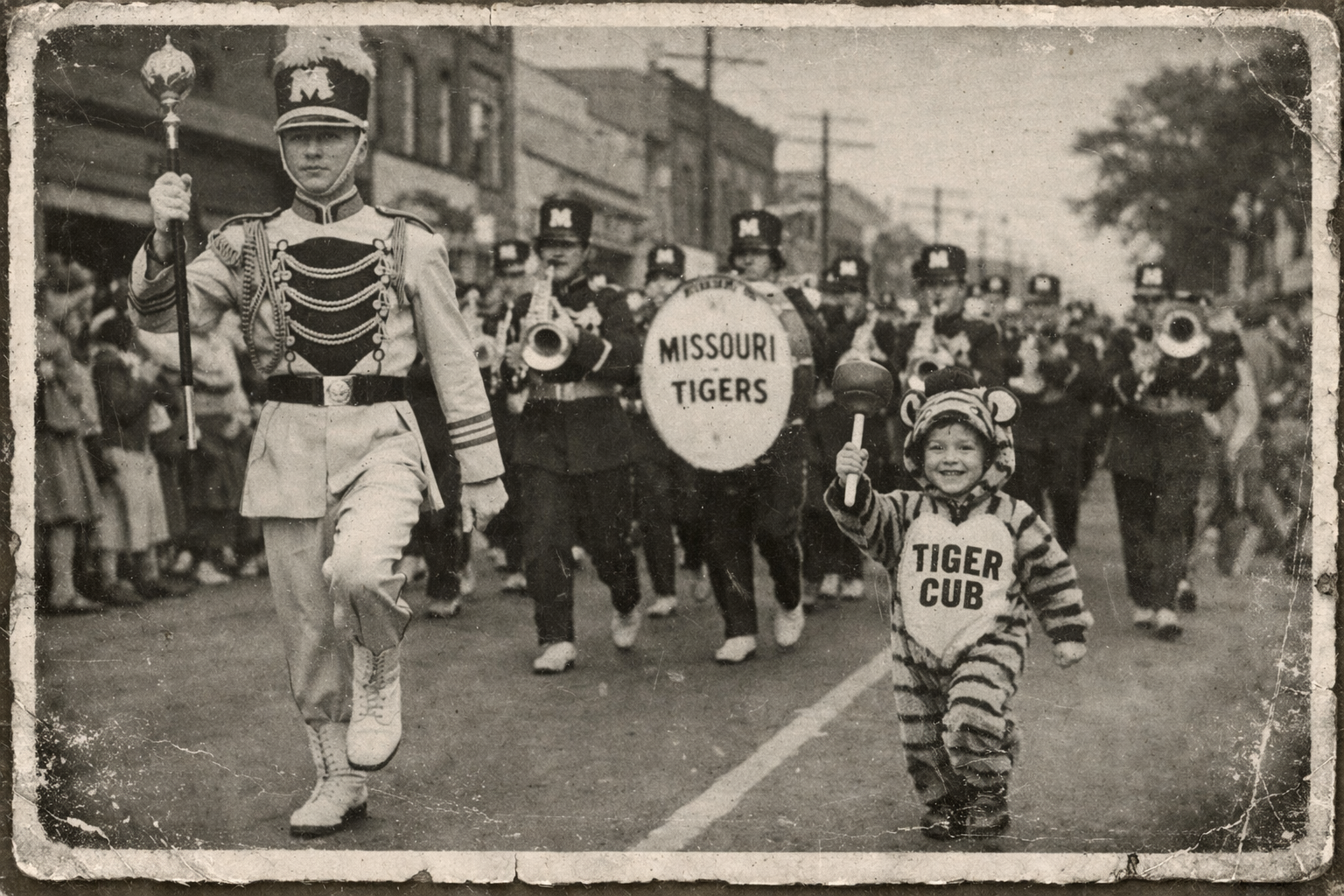
At just five years old, young Kenny embarked on his first entrepreneurial journey. Every game day, thousands of Mizzou Tigers football fans would pass by his barracks apartment along the gravel path to the stadium. Dressed in a Tiger cub costume, Kenny would march proudly, singing the Tigers’ fight song and waving a toilet plunger in time, mimicking the drum major who guided the pep band into the stadium. The crowd’s cheers and applause often turned into spontaneous generosity, as fans tossed coins his way. His mother either caught them with a butterfly net or picked them up by hand. These coins helped support his family, which had recently grown with the addition of his stepsister.
After Bill graduated from Mizzou, Kenny's family moved to St. Charles, Missouri, a suburb of St. Louis nestled along the western bank of the Missouri River. His bond with his mother was deep and nurturing, a stark contrast to the brutal verbal and physical abuse inflicted by his stepfather, who loathed raising someone else's child—especially since he never received a dime in child support from Kenny’s father. Kenny found his strength and purpose in Cub Scouts, where his mother was the den mother.

Later, in the Boy Scouts, he sharpened his entrepreneurial edge by selling Mason shoes, greeting cards, pots and pans, and other items advertised in the back of "Boy’s Life" magazine. Using a swimming mask and a butterfly net, he would scour ponds at golf courses, collecting and selling the balls he retrieved. Though the family grew with two additional stepsisters, Kenny remained isolated, with only his mother providing unwavering support.

When he was nine, his world was shattered as his mother fell severely ill with Multiple Sclerosis and his stepfather’s abuse grew even more relentless. Despite his youth, Kenny did everything he could to care for his mother, taking on responsibilities no child should ever bear, such as managing her personal hygiene.
After high school, Ken Tipton attended Mizzou before enlisting in the Air Force, where he trained in electronics. He traveled the world while working in a military airlift squadron and was honorably discharged in 1976. He returned to St. Louis to work for IBM as a computer technician.
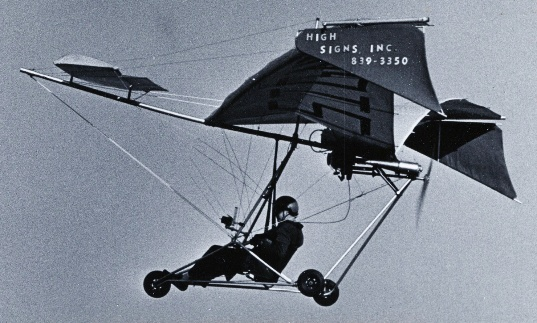
During this time, Ken turned his love of flying into a profitable business by using a powered hang glider to form an aerial advertising company called “High Signs”. Ken would write a commercial message on the wing using black masking tape. He would then fly over parades, large gatherings, and sporting events on weekends, saving the money he and his wife needed for a house, since a baby was due soon.
VIDEO LIBRARY – The First VHS-Only Movie Rental Store in the USA
One day, Ken faced an unexpected challenge when he was called to repair a payroll computer at the largest appliance company in St. Louis after the operator had vomited on it. This repair was no ordinary task and earned Ken a remarkable reward—a floor-model Betamax videocassette recorder, with his boss’s approval. Ken also received the first of three prestigious IBM service awards. The store owner had a handful of Betamax movies that he let customers borrow, like a library, if they purchased a VCR. Ken asked why the movies weren’t rented out and was told it was illegal. Inspired by a story in Entrepreneur magazine about a California video store that rented movies, Ken discovered that renting videos was perfectly lawful. He convinced his wife to use their savings to start their own video rental business, Video Library. At that time, Betamax was the dominant format, but Ken’s research revealed that VHS was poised to overtake it.
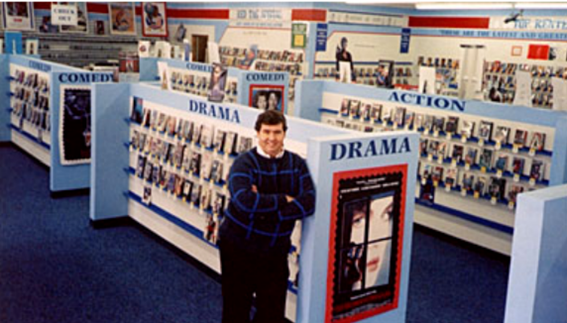
Ken opened the very first VHS-only video rental store in the country, but he soon faced a harsh reality: no one in St. Louis owned VHS recorders, which cost thousands of dollars. For over five months, movie rentals were nonexistent, and just when it seemed all was lost, legendary rock ‘n’ roll icon Chuck Berry saved the day. Berry, who owned a sprawling compound in Wentzville, Missouri—near Ken’s store in St. Charles—kept the store afloat by renting 30 movies per month for 30 days.
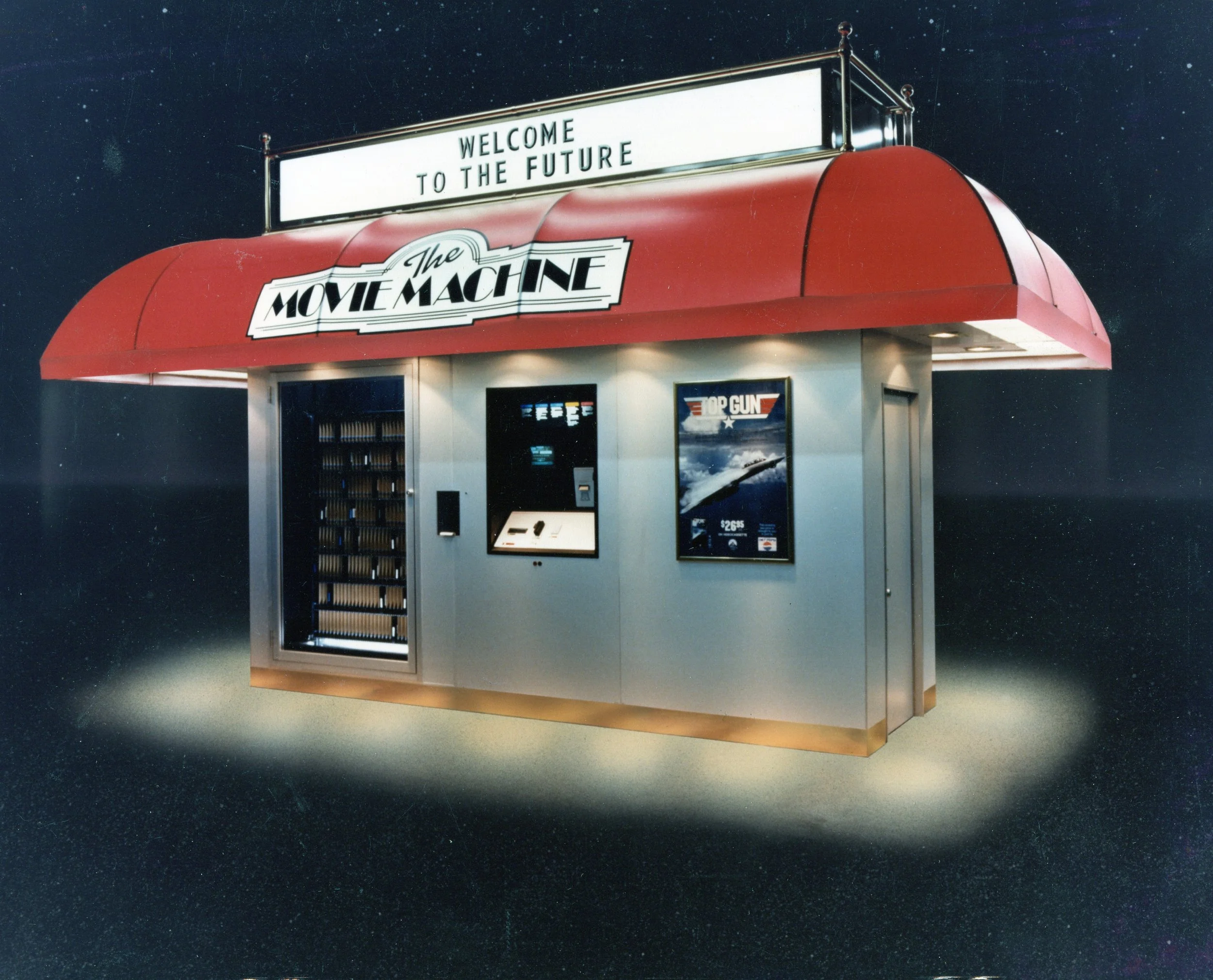
That Christmas, as VHS players flooded the market, Ken’s store became the only game in town. Video Library grew into a multimillion-dollar chain, expanding nationwide with franchise stores and innovative robotic videocassette vending kiosks called “Movie Machines.”
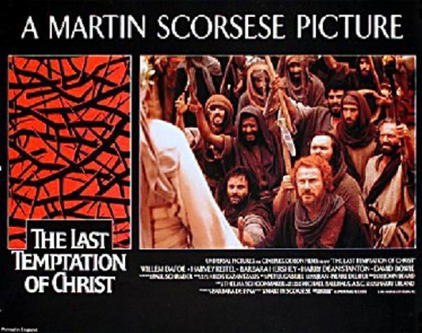
Ken quit his job at IBM to expand his business, which involved opening the region’s first Paintball field. However, his ambitious plans eventually fell apart—costing him everything, even his marriage—after he refused to remove Martin Scorsese’s controversial film, “The Last Temptation of Christ,” from his stores.
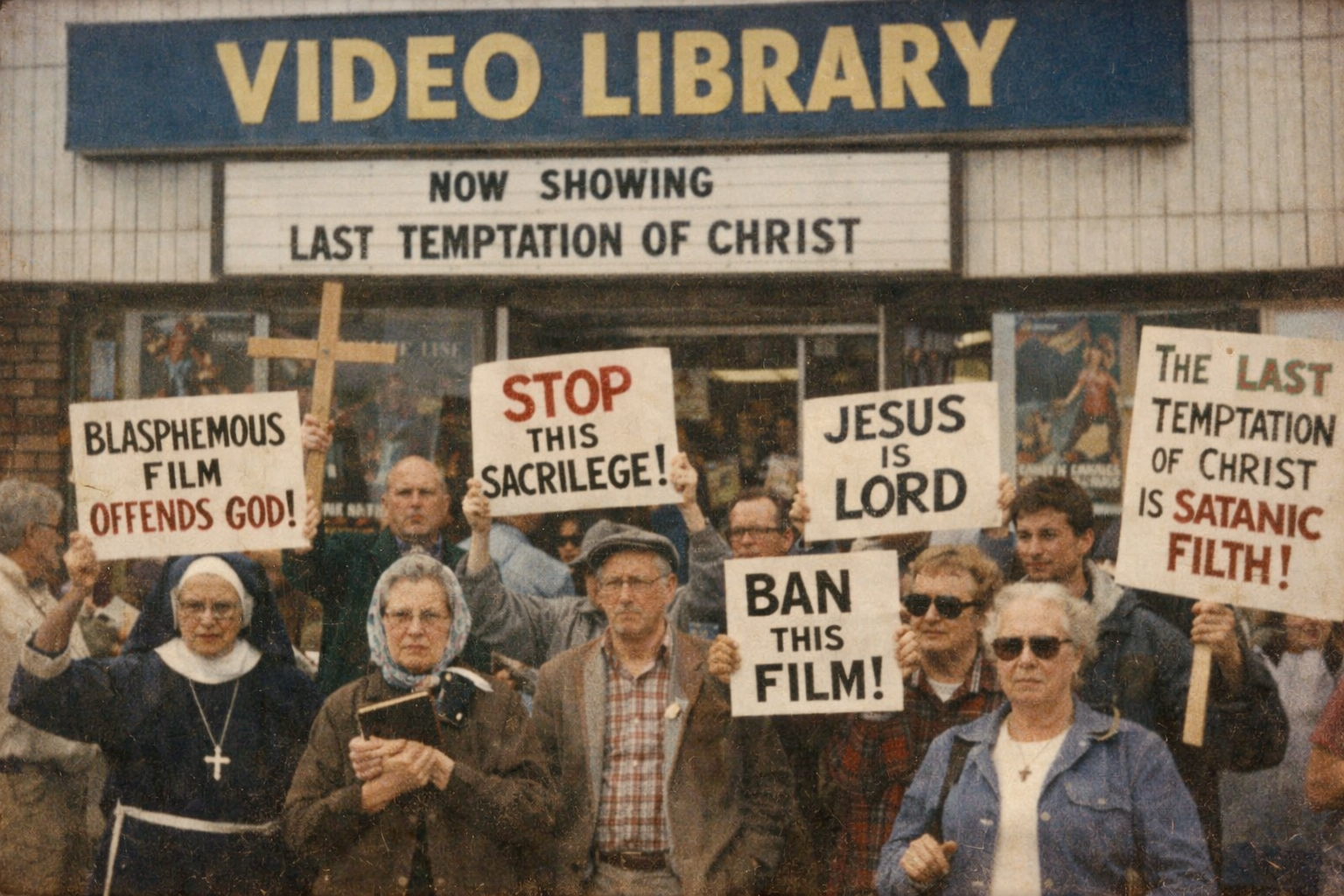
Ken Tipton and Martin Scorsese share more than meets the eye. Both were skinny Catholic altar boys battling asthma, fiercely loyal to their mothers, and obsessed with movies. Yet, their paths collided in a storm of controversy when Scorsese’s daring film, “The Last Temptation of Christ,” sparked a furious religious backlash.

Reverend Donald Wildmon and his National Federation for Decency, now the American Family Association, launched relentless attacks, including bomb and death threats, targeting Scorsese and MCA/Universal. The chaos escalated to the point where Scorsese and Universal’s top executive, Tom Pollock, had to hire bodyguards and tighten security for their families and staff.
Ken's employees and loved ones were not spared from the chaos, who also faced death threats, and Ken's young daughter was almost kidnapped. The religious zealots used blackmail to force the St. Louis prosecutor to ruin Ken’s business and family. Ken triumphed in two court battles, but the publicity and legal costs drained his resources, leading to the collapse of his business and family, and ultimately to his divorce.
Starting over, Ken borrowed money from his uncle to relaunch his Paintball Wargames business. One fateful day, his paintball referee called with shocking news: the very religious group that had destroyed him was there to play. Ken instructed his referee to ask the group if they minded a walk-on player joining in. They agreed. Disguised in full paintball armor with a face mask, Ken arrived armed with his most powerful paintball gun.

Outperforming the regular guns, he would switch sides after each game. Ken immersed himself in vengeful joy, ruthlessly shooting the players on both teams with painful precision. At day’s end, Ken revealed himself, igniting chaos as he and his referee unleashed a barrage of searing paintballs on the religious zealots. Days later, one of the women who had played for the religious group reached out, remorseful for her role in destroying Ken’s business and family. She revealed how the group had blackmailed the St. Louis prosecutor, George Peach, into ruining Ken.
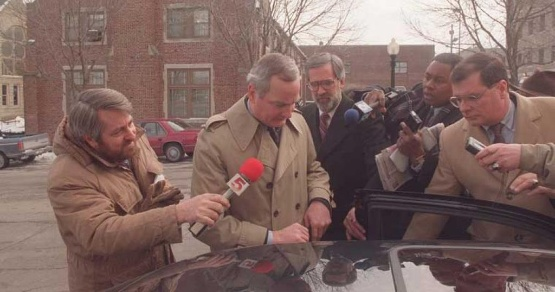
With the help of TV reporter Herb Humphreys and some disillusioned police officers, they orchestrated a prostitute sting that toppled the corrupt prosecutor. It was then uncovered that he had been embezzling from a crime victims’ fund for years. Peach was disbarred and sentenced to prison. However, the Missouri Attorney General suspended the sentence, knowing Peach would face vengeance and his life would be in danger from men the former prosecutor had put away.
FAMILY FLOOD PROJECT
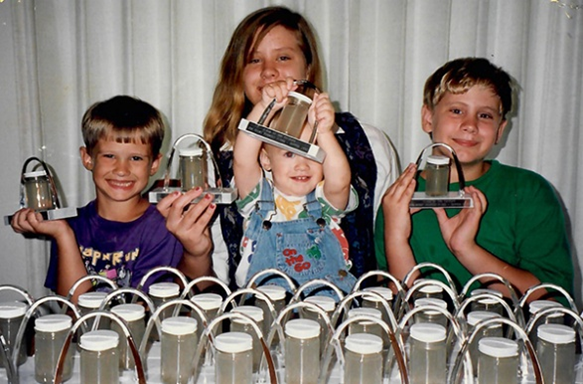
In 1993, during the St. Louis “flood of the century,” Ken volunteered to build sandbag floodwalls. His four young children wanted to help, but they were too small. Ken assigned them a special project: creating “flood souvenirs” for the volunteers, featuring a replica of the St. Louis Gateway Arch with a small bottle of floodwater beneath it.
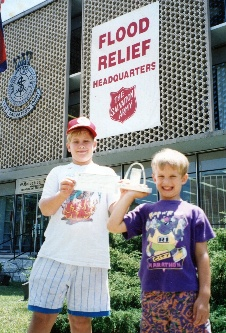
A CNN reporter happened upon the family collecting Missouri River floodwater into tiny glass jars, and the story grabbed worldwide headlines. The family's flood souvenirs became a sensation, as they were personally handed to Vice President Al Gore and Missouri Governor Mel Carnahan during their visit to the devastated region. Orders flooded in from across the country. When the fame subsided, each child was allowed to keep $50, and the rest of the money was donated to the Red Cross and Salvation Army.
HOLLYWOOD
That same CNN reporter later introduced Ken to a Hollywood movie producer who optioned his family's story of losing his video business. Desperate to get the true story of how his business and family were ruined, Ken moved to Los Angeles to live with his brother, working as an armed bodyguard while the producer scrambled to turn his compelling tale into a film. However, studio executives deemed the subject too controversial to pursue. To make ends meet, Ken also took on acting gigs as an extra in hundreds of movies and TV shows. Acting wasn’t new to him—he had been deeply involved in high school and community theater, and back in St. Louis, he appeared as an extra in nearly every production passing through town, including his very first on-set experience in "Escape from New York" and as John Candy’s stand-in on "Planes, Trains, and Automobiles."

In an attempt to earn his Screen Actors Guild (SAG) card, Ken desperately tried to reach John Candy for advice, but all his efforts went unanswered. Frustrated, he turned to Dawn Steel, the producer of “Cool Runnings,” in which Candy starred. Dawn Steel was also a trailblazer as the first woman to run a major motion picture studio, Paramount. She refused to personally contact Candy on Ken’s behalf and instead challenged him to read her electrifying book, “They Can Kill You, but They Can’t Eat You,” the definitive book on how Hollywood really worked. She revealed how gatekeepers always protect their bosses, and you must find alternative ways in.
Ken discovered that John Candy was a partner in the Toronto Argonauts football team, alongside hockey legend Wayne Gretzky, who was married to actress and dancer Janet Jones. Janet hailed from Bridgeton, MO—a suburb of St. Louis, where Ken once owned a video rental store. Janet’s mother was a loyal customer, even bringing Janet in to sign autographs, as she had starred in “The Flamingo Kid” and “A Chorus Line.” Ken reached out to Janet’s mother, who passed his letter to Janet, then to Wayne, who finally handed it over to John Candy. Weeks later, Candy phoned Ken, igniting a connection that seemed straight out of Hollywood itself.

John recalled the time when Ken was his stand-in in St. Louis and instructed him to check the Los Angeles film office for filming permits—especially for remote locations where finding extras would be a nightmare if someone didn’t show up. Ken’s eye fell on "The Flintstones," shot far from Los Angeles in a rock quarry. Desperate for work, Ken approached the Assistant Director, only to be told there were no openings. Not willing to give up, Ken rolled up his sleeves and proved his worth—cleaning dusty cast and crew cars in the quarry parking lot for ten days straight.

Fate finally opened a job, and he earned his SAG card on the day John Candy died. Ken’s first professional acting role was as John’s photo-double in the movie “Wagons East,” which John had passed away while filming.
Overcome with emotion, Ken cried every time he put on John’s clothes, vowing to honor Candy’s final request: to help other actors earn their SAG cards. Years later, as a director, Ken helped five struggling actors get their SAG cards. What goes around definitely comes around.
TOM POLLOCK
Ken approached Tom Pollock, the head of MCA/Universal Pictures during the 1980s and 90s, for mentorship. Pollock was the man who greenlit Martin Scorsese’s controversial film “The Last Temptation of Christ,” which faced fierce harassment and death threats—threats that Ken and his family had also endured. Pollock advised Ken that the best shot at getting his film made was as a low-budget independent production with a maximum budget of $2 million.
Ken begged Pollock to help him contact Martin Scorsese for assistance in bringing his vision to life. But Pollock pleaded with Ken to abandon the idea—explaining that Scorsese could not risk again being the target of religious outrage and threats to his family, employees, and himself. Tom said that Scorsese would want to help Ken with all his heart—yet the emotional weight of past harassment and threats would force him to turn away. In light of this, Ken understood and agreed, never asking Scorsese for assistance.
Update: Before Mr. Pollock passed, he helped Ken file his child sex abuse claim against the Boy Scouts of America. More information is below.

MARK CUBAN
Ken was working as an armed bodyguard/limo driver for high-profile clients. On March 11, 2000, a man dropped his business card on the limo floor. Ken found it while cleaning the limo and remembered hearing the man talk about Mark Cuban, the wunderkind startup developer who had sold Broadcast.com and was intent on helping other entrepreneurs with their projects. On the back of the business card was Cuban’s name and home telephone number. With nothing to lose, Ken called—and Mark Cuban answered.
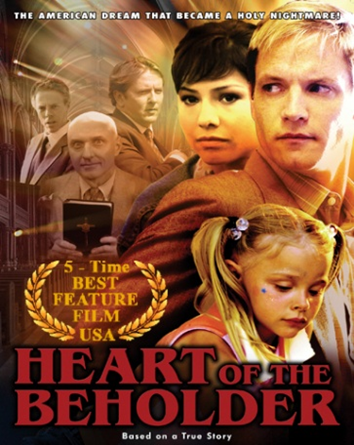
Cuban was very courteous and allowed Ken to pitch his family’s project, “Heart of the Beholder”. Ken begged for $2 million to produce the film, and while Mark believed the project had merit, he declined Ken's request, giving this advice: “The only thing worse than failure is never knowing what could have been, if only you had taken the chance.” Cuban encouraged Ken to seize every possible opportunity by “making his own beaks instead of waiting for them”.
The next day, Ken followed Mark’s advice and pitched his film to an A-list celebrity, which led to his firing.
An online story about Ken titled “How to NOT Make it in Hollywood” was read by a network studio executive named Darlene Lieblich. Darlene worked in broadcast Standards and Practices (the TV censor) and had to constantly deal with the same religious zealots who ruined Ken’s family. She had never produced a movie before, but took the leap by optioning Ken’s life rights.
Darlene and Ken raised $300K and made HOTB in 2004, which won 5 Best Indie Feature Film awards in a row before Reverend Wildmon’s followers began trashing the movie with negative votes, resulting in 5 consecutive 2nd-place finishes.
HOTB was also the movie debut of Chloe Grace Moretz. Ken sent a DVD to Scorsese’s casting director, Ellen Lewis, and Chloe was chosen to costar in Scorsese’s award-winning movie “Hugo”.
Darlene and Ken were married in 2005.
CHILD PROSTITUTE EXPLOITED THROUGH A BOY SCOUT SEX RING
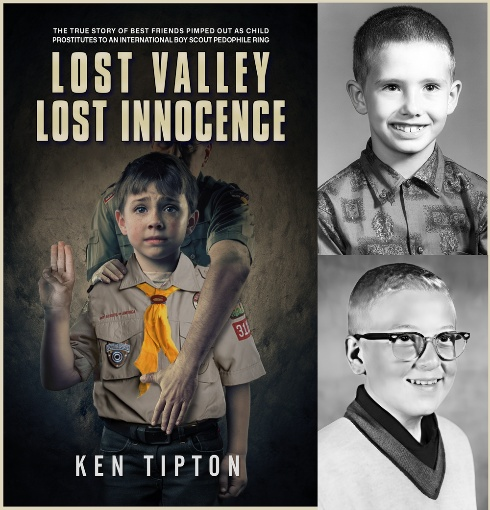
When Darlene optioned Ken’s life rights, he also gave her a book he had written in 1988 while serving as a Scoutmaster.
From 1964 to 1967, Ken and his closest friend were exploited as child prostitutes by an international pedophile ring linked to the Boy Scouts of America—a sinister network dismantled in the 1970s by Harry Connick Sr., father of actor-singer Harry Connick Jr.
However, upon the arrival of Ken’s first grandchild, he was overwhelmed by guilt and shame. Unable to bear the thought of his children and grandchildren discovering his dark past, he made a desperate choice: he burned the book, erasing his secrets forever.
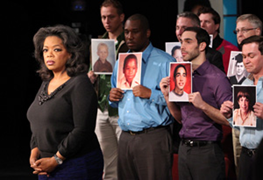
In 2010, Oprah Winfrey did something transformative. She gathered 200 men who had been sexually abused as children and filmed a two-episode show, allowing them to speak honestly without judgment.

Watching Tyler Perry share his own story, Ken realized he wasn’t alone—and that he wasn’t crazy for still feeling broken inside. Those moments didn’t just inform Ken—they gave him the courage to share his story, hoping his children and grandchildren would forgive him for his childhood mistakes.
Ken rewrote his book and asked his wife, Darlene, to promise not to publish it until after his death.
In 2019, the Boy Scouts of America took responsibility for covering up child sexual abuse for over 100 years. With Tom Pollock’s legal assistance, Ken filed his sex abuse claim alongside more than 82,000 fellow abused Scouts.
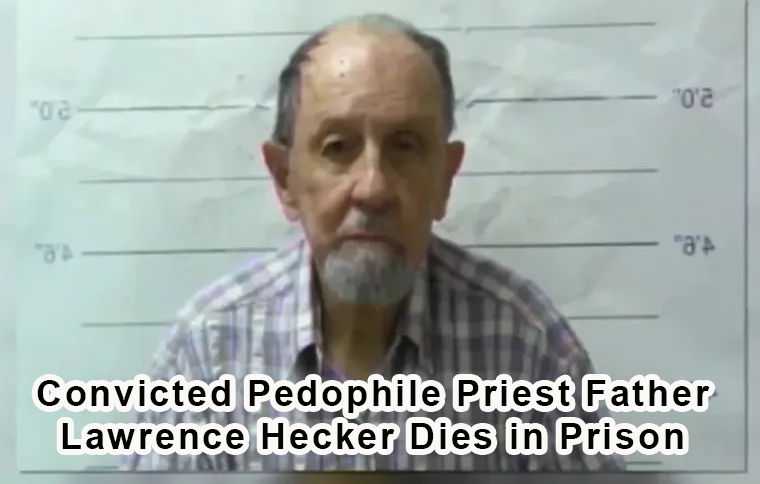
Pollock also assisted Ken in filing his sexual abuse claim against Father Lawrence Hecker and the Catholic Archdiocese of New Orleans.
Hecker admitted he had abused young boys, many of whom were in the Boy Scouts, for over five decades, and died in prison.
Ken created a website with an explanatory video about his book, “Lost Valley – Lost Innocence,” describing his experiences as a child prostitute at the Lost Valley Boy Scout camp near St. Louis.
2026 - Jordan Pavlin, the Editor-in-Chief at Penguin Random House, saw the explanation video at www.LostValleyMovie.com and requested to preview his book, which is currently under review.
FOSTERFOLKS.COM - Building New Families, One Heart at a Time!

During the tumultuous 2016 Presidential election, Ken’s daughter severed all contact with family members without any explanation. Since that time, Ken and Darlene have not seen their grandchildren.
Grandparent Alienation is a sick and selfish form of child abuse, occurring when parents manipulate their children as pawns against the grandparents. In the United States, there are over 2,500 support groups dedicated to Grandparent Alienation, and June 14 is recognized as Grandparent Alienation Day.
Ken and Darlene are in prime grandparenting mode and sought a way to serve as symbolic foster grandparents to a family without grandparents. When none were available, they founded FosterFolks.com.
FosterFolks.com is a unique online platform that connects senior singles and couples as symbolic foster grandparents with families lacking grandparents. It also pairs younger singles or couples—particularly from the LGBTQIA+ community—as symbolic foster aunts or uncles with families looking to form new bonds.
Matching is based on searchable criteria such as race, location, interests, religion, political beliefs, and sexual orientation. Maps display potential matches and can be adjusted to focus on specific groups by distance. Users can communicate with matched individuals via messaging, chat, or video calls before deciding to meet in person.
Foster Folks strongly recommends using the website's available background check services before meeting their matches in person.
SHARK TANK
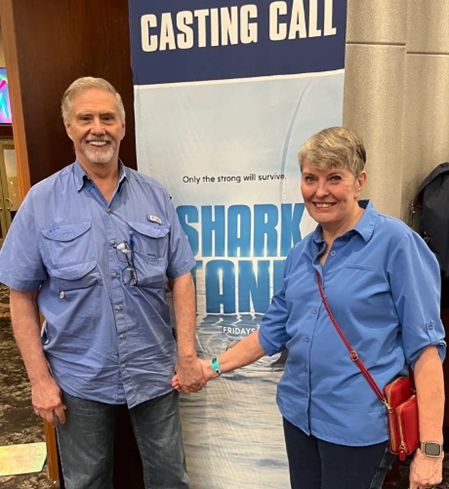
Ken and Darlene unexpectedly received an invitation to audition for Shark Tank, where the interviewers loved their idea. A memorable moment occurred when several Shark Tank interviewers approached them at dinner, noting they had never seen a concept like theirs.
The interviewers believe Foster Folks has "unicorn" potential: a startup worth at least $1 billion after an initial public offering, given its unique concept and no competition, which could enable global implementation.
They took photos with the senior startup founders and mentioned they could be the oldest "unicorn" founders in startup history. The Tiptons were touched by their enthusiasm and deeply grateful for the feedback.
FOSTER FOLKS PODCAST & REALITY SHOW
Ken and Darlene work in the entertainment industry and want to create a distinctive reality show featuring heartfelt stories of senior singles and couples who become symbolic foster grandparents.
The show will also highlight younger singles and couples, particularly from the LGBTQIA+ community, who aspire to be symbolic foster aunts and uncles. Additionally, families seeking foster grandparents, aunts, and uncles for their children will be featured.

An essential element of a successful podcast or reality TV show is emotional conflict, which could explore Grandparent Alienation. A podcast or reality TV show featuring heartwarming scenes of new families forming and emotional moments between estranged grandparents and their children, which may or may not end in reconciliation, could attract a large, untapped audience.
FosterFolks.com is the Tiptons’ “legacy” project, and their IPO will be funded by Ken’s settlement with the Boy Scouts of America for past child sexual abuse.